When people talk about apparatus Pilates today, most think of the Reformer. But Joseph Pilates developed a whole range of apparatus that together form a well-thought-out system. Each has its own purpose. Some support, some challenge, all train strength, mobility and control.
The Reformer
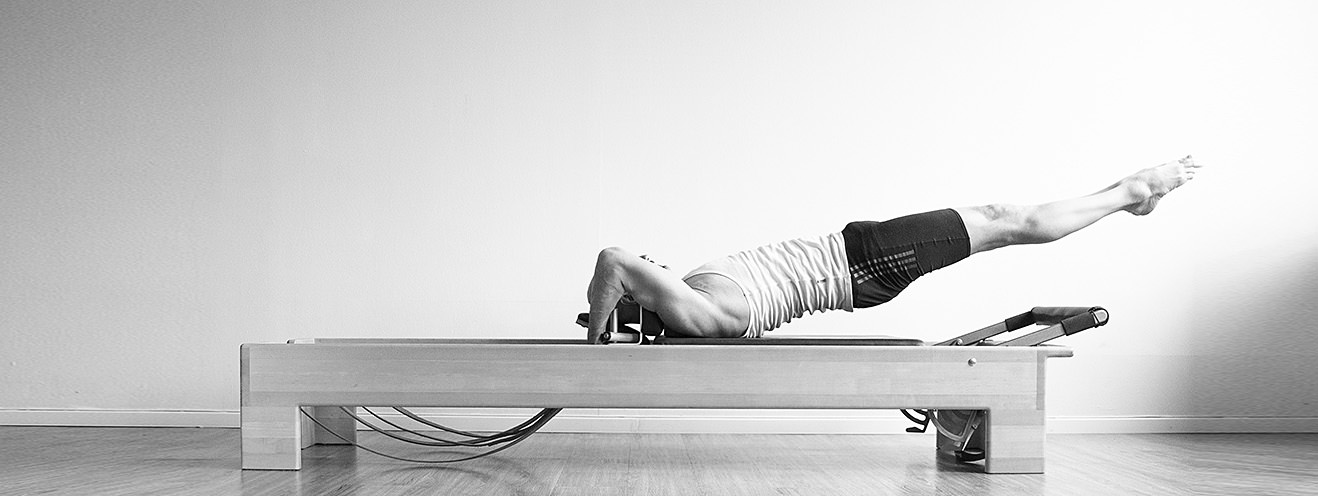
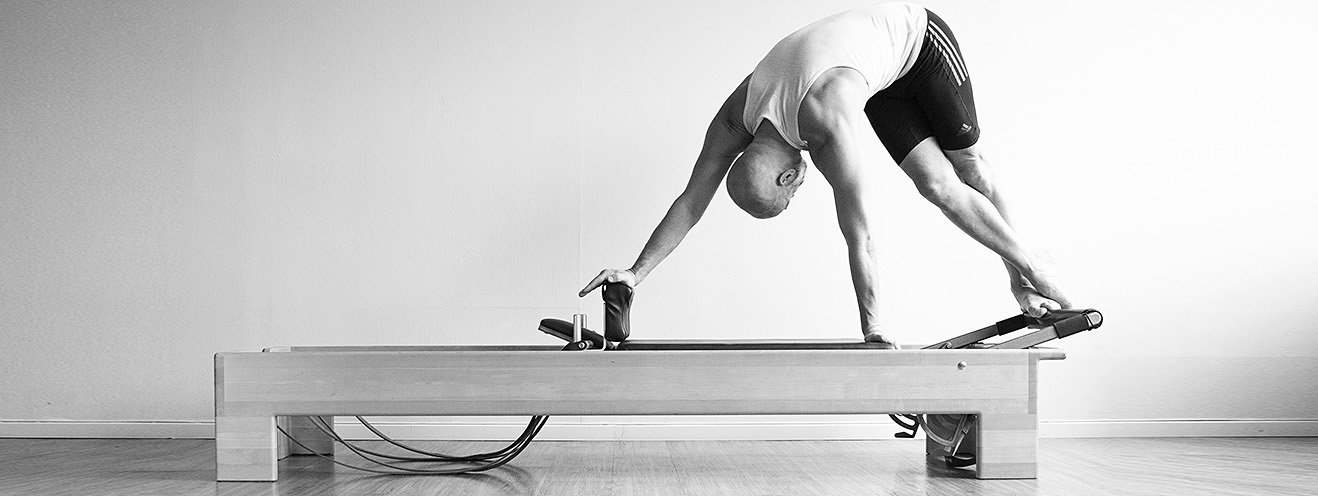
The heart of every classical studio. A frame with a moving carriage, springs, ropes and straps. You train lying, sitting, kneeling or standing. The springs create resistance or give support. The Reformer breaks down the flowing movements of the mat into individual building blocks and strengthens you so that you can perform the mat exercises effectively. At the same time, it offers many additional exercises for strength and athleticism.
The Cadillac
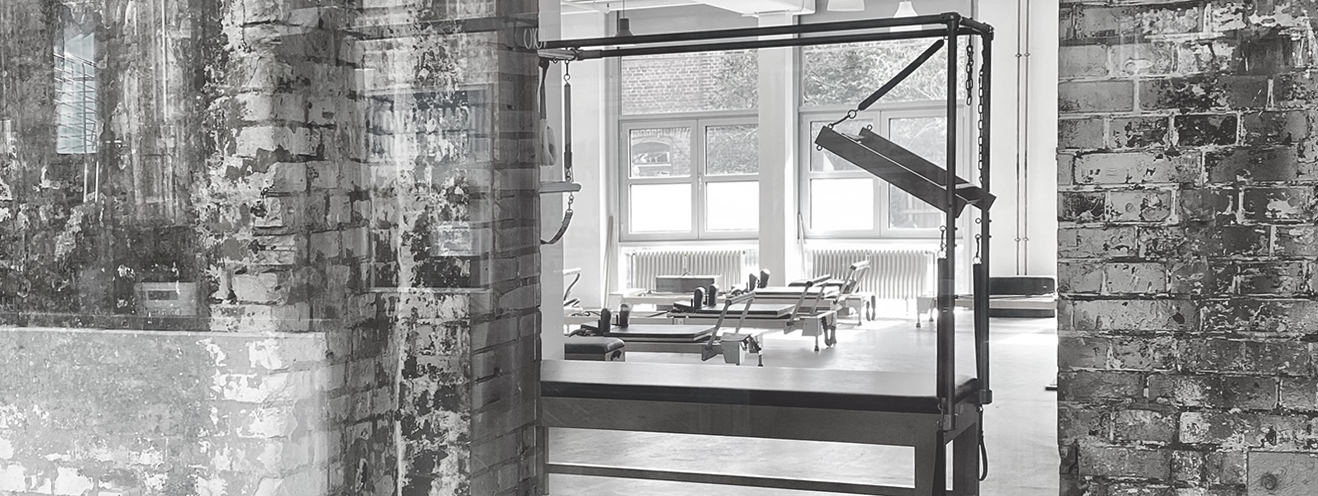
Also called the Trapeze Table. A raised platform with a frame above it to which springs, bars and straps are attached. The Cadillac is incredibly versatile. From gentle, spring-assisted roll-up exercises to acrobatic movements, almost anything is possible. That makes it just as suitable for rehabilitation as for very advanced training.
The Wunda Chair
A small, compact piece of apparatus that looks like a stool at first glance. A spring-loaded pedal provides resistance. The Chair targets muscle groups that are hard to reach with other methods and demands a great deal of stability and balance. Modern versions have a split pedal that also allows alternating and rotational movements.
The Ladder Barrel
A padded curve with a ladder of wooden rungs next to it. The Barrel challenges trunk stability and strength at every level and is ideal for stretching the spine, hips and legs. A piece of apparatus for intense core training and greater mobility.
The Spine Corrector
A smaller, curved piece of apparatus that supports the natural curve of the spine. Exercises on the Spine Corrector lengthen and strengthen the trunk, shoulders, back and legs. It helps bring the spine back to its natural shape and is ideal for anyone who sits a lot.
Why several pieces of apparatus
Each piece of apparatus looks at the same body from a different angle. What is difficult on the Reformer becomes clear on the Cadillac. What is stretched on the Barrel is strengthened on the Chair. Together they create a complete workout that can be tailored precisely to your body.
Where you can experience the apparatus
Our group classes take place on the Reformer. We use the other studio apparatus mainly in personal training. There the training is tailored entirely to you – whether you are just starting out, finding your way back after an injury or want to dive deeper into the method. In English on request.
Conclusion
Reformer, Cadillac, Chair, Barrel and Spine Corrector: Joseph Pilates created a system that offers the right approach for every body.
You’ll find more about personal training on the studio apparatus under prices.